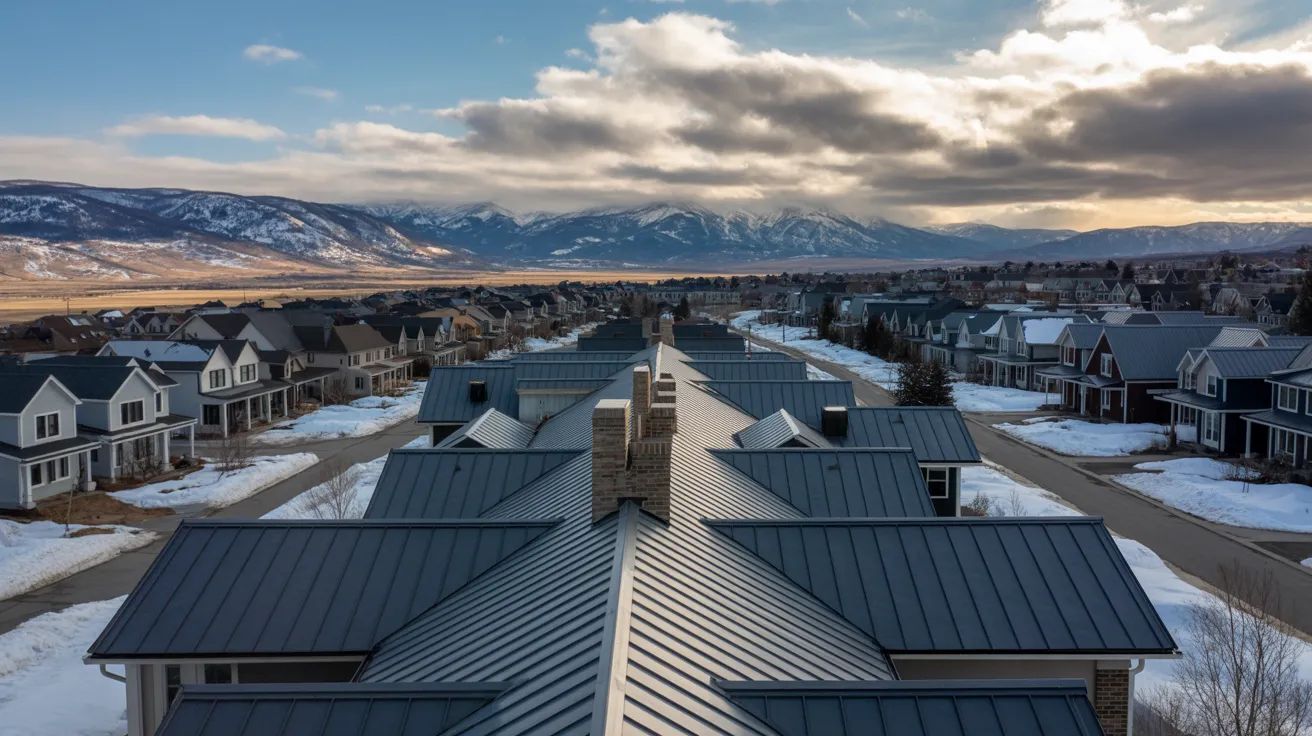
For Great Falls, roofing needs to endure strong ultraviolet, strong wind, snow loads, and temperature fluctuations. Metal roofing systems delivers superior performance versus standard asphalt through withstanding impact, fire, uplift, and accelerated weathering, and removes snow much faster. Check for fractured shingles, flashing gaps, water intrusion, missing granules, and areas that sag in the aftermath of storms. An experienced roofing professional will review decking, underlayment, ventilation, analyze storm-related damage, and propose repair or replacement considering extended performance.
Main Highlights
- Roofs in Great Falls need to resist intense UV, powerful gusts, substantial snowfall, and freeze–thaw cycles leading to worsen leaks and structural failure.
- Metal roofing systems remain serviceable 40 to 70 years, withstand wind, fire, and impact better versus asphalt shingles, and move snow most effectively.
- Asphalt shingles run less upfront but often wear faster, with curling, cracking, plus granule loss in Great Falls seasonal patterns.
- Red flags include fractured shingles, lifted flashing, rusted valleys, ceiling discoloration, attic moisture, plus damage from storms across several roof slopes.
- Roofing experts in Great Falls execute inspections, leak diagnostics, storm repairs, and emergency tarping, and quality metal roof installation featuring suitable underlayment and flashing.
Ways That Great Falls Climate Affects Roofing Systems
Your roof in Great Falls faces harsh sun, wind stress, hail damage, deep snow, and rapid temperature swings creating ongoing strain that cuts lifespan. Exposure to UV parches roof elements, weakens sealants, and quickens deterioration. Wind pushes margins, drives moisture beneath unprotected areas, and separates flashing materials around penetrations.
Heavy snow imposes stress, with ice dams block moisture along eaves and boost leaking potential. Repeated freeze thaw cycles expand small cracks, split joints, and damage the underlayment. Hailstones bruise protective surfaces, damage coatings, and leave exposed substrate materials to moisture intrusion. You additionally encounter microclimate influences: south-facing sections warm up quicker, areas in shade stay wet longer, and windward areas wear harder. Periodic inspections help property owners identify damage from storms quickly, safeguard water drainage
Metal Roofing against Shingles in Great Falls
When you evaluate metal roofing to asphalt shingles in Great Falls, the see the full story decision usually comes down to weather resistance, durability, maintenance, and long-term cost. Metal roofs withstand damage from impact, fire, and wind better than shingles, and they typically endure 40 to 70 years instead of 15 to 30.
Generally, you'll pay out more at the start for metal roofing systems, but you may swap out it less frequently and perform less maintenance. Traditional shingles price less at first and provide simpler spot repairs, but they can become curled, cracked, or lose their granules sooner. Metal roofing systems also facilitates smooth snow shedding, which may reduce snow accumulation when properly designed with guard systems. In the event you're thinking about installing solar, metal roofing generally provides easier mounting options and minimal roof openings. The right option comes down to your financial situation, how long you intend to stay, and your comfort level with maintaining it.
Why Metal Roofing Performs in Montana
Built for temperature swings, powerful gusts, significant snow, and strong sun exposure, metal roofing thrives in Montana's demanding weather conditions. You gains a mechanism that handles thermal movement, swiftly drains water, and sustains structural strength during freeze and thaw processes. Interlocking metal components, invisible fasteners, and advanced protective coatings curb uplift risk, corrosion, and solar damage.
You also benefit from efficient snow shedding, which minimizes static roof loads and safeguards roof structure. Because metal roofing bounces back sunlight, it can moderate attic heat gain in warm, arid seasons. Its low water absorption ensures performance when ice and snow occur. Metal longevity matters in the Montana region, where constant weather exposure can shorten inferior roofing options. With correct underlayment, adequate ventilation, and expert installation, your roof remains strong, energy-saving, and functional for decades with minimal maintenance overall.
Indications You Should Get Roof Repair Work
Recognizing roof defects in good time prevents structural issues, interior water damage, and pricey new roof costs. Scan shingles that are cracked, flashing coming up, exposed nails or screws, rust-colored valleys, and caulking that's failed at vents, skylights, and chimneys. In the living areas, note brown stains, damp insulation, fungal issues, or daylight visible through decking
Post-storm, look for signs of impact, moved materials, and absent granules in drainage channels. Checking for granule shedding facilitates identifying damaged asphalt zones before water seeps through the base layer. Insufficient roof ventilation also results in telltale signs: overwhelming heat, frosting, moisture problems, and shingles curling too soon. In case electricity bills jump out of nowhere, excess dampness and thermal buildup could be compromising roof function
Get roof service as soon as you spot sunken spots, persistent seepage, or moving metal trim. Rapid fix ensures safety of roof sections, insulation, and room finishes
Roof Replacement Often Makes More Sense
You should assess roof replacement when severe weather damage affects large sections, damages structural components, or surpasses practical repair limits. If you continue paying for recurring leaks, failed patches, or frequent service calls, new roof installation often gives you better long-term value. An older roof assembly near or past its design life cannot protect your home effectively, even if individual repairs may appear possible.
Major Weather Destruction
When a severe storm impacts large sections of your roofing, a complete replacement typically provides more financial and structural sense than repeated repairs. Following hail aftermath, wind damage, or branch punctures, you may have damaged decking, saturated underlayment, and widespread shingle failure that repairs can't reliably isolate.
You require a comprehensive evaluation, not temporary fixes. Weather damage often break seal integrity, loosen fastening systems, and form hidden moisture routes near valleys, vents, and flashing. Following cleanup, trapped water can continue damaging insulation and sheathing below the surface. If damage impacts several slopes or compromises the roofing system, new installation restores consistent protection, code compliance, and manufacturer-backed performance. It additionally permits you upgrade ventilation, underlayment, and impact-resistant materials so your next severe storm won't exploit the same vulnerabilities once more.
Repeated Repair Costs
Frequently, recurring leak repairs, shingle replacements, and flashing repairs accumulate higher costs as opposed to a planned roof replacement. When you're requesting service each season, you're likely trapped in spending cycles that drain your budget without addressing underlying deck, ventilation, or underlayment issues. Minor repairs may restore function briefly, but they seldom deliver comprehensive performance.
You should compare yearly repair costs versus replacement costs, labor escalation, and material matching problems. Repeated fixes additionally generate warranty gaps, particularly when multiple contractors manage different sections or different product lines. These gaps can leave you covering costs yourself when new failures emerge around earlier repairs. A complete replacement gives you one integrated assembly, predictable installation standards, and a cleaner maintenance schedule. In many cases, that reset reduces long-term roofing costs and minimizes service disruptions significantly.
Aging Roofing Systems
As roofing systems accumulate age, material weakening occurs alongside fastener loosening, sealant deterioration, and drainage system failure, increasing vulnerability to leaks and weakening environmental defense. Visible indicators feature cracked shingles, membrane rupture, rust at penetrations, and repetitive post-storm leaks. Symptom patching cannot resolve comprehensive deterioration.
Roof replacement proves beneficial when inspections uncover moisture in roof structure, significant granule deterioration, insulation impairment, or inadequate ventilation balance that magnifies heat buildup. Also evaluate code modernization, attachment integrity, and newer material integration. Full replacement systems help fix concealed damage, optimize water drainage, and deploy rated systems appropriate for modern conditions. Initial outlays are substantial, although emergency interventions diminish, water intrusion damage reduces, and total cost efficiency improves.
How Great Falls Roofers Handle Storm Damage
Because intense storms can damage roof structures in moments, Great Falls roofers start storm-damage work with a fast, systematic inspection of shingles, flashing, underlayment, decking, and metal panels to locate both obvious damage and concealed moisture paths.
Following damage inspection, you obtain thorough documentation of damage levels, moisture problems, and structural concerns. Roofing specialists removedebris first to avoid additional scratching and keep water flowing. Tarps shield exposed regions, punctures are patched, displaced shingles are reset, flashings are secured, and metal fastener security is assessed on metal areas. When decking absorbs water, saturation testing, delamination assessment, and mold detection takes place before work authorization. Photographic records and measurement data support claim filing and allow prioritization of stabilization ahead of aesthetics.
Metal Roofing Installation Procedures
Starting with tear-off to completed trim, metal roof installation methods observe mandatory sequence protecting residences and ensuring panel performance. Removal of existing roof commences first, assessment of decking takes place, and problem decking areas are replaced. Slope confirmation, measurement verification, ventilation path assessment, and fastening zone identification follows for accurate panel placement.
Afterward, edge trim materials, moisture barriers, and backing material selection are determined by climate factors, roof slope, and code standards. Starting from squared alignment, panels are attached following manufacturer requirements. For seam-locked systems designs, vertical seam edges are locked tight and positioned straight directing water runoff and accommodating expansion. In final steps, openings are flashed, cap and edge trim are placed, critical junctures are sealed, and cleanup and inspection confirms weatherproofing and looks.
What Great Falls Roofing Experts Offer
For any basic repairs or complete replacements, Great Falls roof specialists usually handle evaluations, leak diagnostics, storm damage repairs, roof recovery, new roof setup, and preventive care for residential and commercial buildings.
In addition to standard services, you can employ them for flashing replacement, ventilation fixes, gutter setup, skylight sealing work, and ice dam removal. If wind or hail exposes roof decking, they shall execute temporary tarping to minimize water penetration before permanent repairs. Regarding older roofs, they evaluate roof underlayment, fastening systems, roof penetrations, and drainage paths, then recommend targeted repairs or total replacement when appropriate. Several teams service asphalt roofing, standing seam roofing, low-slope membranes, and roof coatings. They may catalog damage for insurance claims and schedule seasonal maintenance to identify sealant deterioration, oxidation, panel movement, and valley blockage prior to those issues diminish your roof longevity.
How to Choose the Right Great Falls Roofing Professional
When choosing a Great Falls roofing professional, check they hold correct certification and hold up-to-date workers' compensation and liability insurance. Subsequently, compare the roofing products they advise permitting you to align performance metrics, service life, and budget to your undertaking. You should also to consider their experience in the area, as roofing contractors understanding Great Falls climate conditions and building codes typically achieve more dependable results.
Verify Licensing And Insurance
Before you complete any roofing agreement in Great Falls, check that the roofing contractor possesses the necessary Montana license and has general liability and workers' compensation insurance. Don't depend on verbal assurances. Ask for the professional's licensing information, company name, and insurer details, then conduct licensed verification via state databases and local registration records. Verify the business name on each record.
For verification of insurance, demand that current insurance certificates transmitted directly from the insurer or agent representative. Review policy numbers, effective coverage dates, policy limits, and policy exclusions. Check that workers' compensation insurance protects each employee on the property. Should a contractor hires outside contractors, demand evidence of insurance in addition. Proper insurance and licensing safeguard you against exposure to liability issues, code violations, unpaid liens, and delays. In the event that documentation doesn't match, choose a different contractor.
Evaluate roofing materials
Since Great Falls roofs endure hail, strong winds, heavy snow, and dramatic temperature changes, you should evaluate materials based on durability, lifespan, upkeep requirements, and overall installation expenses—not simply the initial estimate.
Asphalt shingles tend to provide the most budget-friendly installation costs, still impact resistance ratings, wind warranties, and granule loss matter. Metal involves greater upfront costs, yet it sloughs off snow, offers fire resistance, and realizes enhanced energy efficiency by way of reflective finishes. Synthetic slate and composite shingles reduce weight loads while enhancing impact durability, notwithstanding product quality varies. Solicit manufacturer information on Class 4 impact performance, wind uplift measures, ice-dam behavior, and anticipated longevity. You should review underlayment systems, ventilation compatibility, attachment methods, and maintenance ease. A affordable roof becomes pricier in time if it fails prematurely or requires continual storm damage work and replacement requirements.
Examine local expertise
Material preference matters, though the roofer's area track record often governs capability that installation performs in Great Falls. You need to verify how many years a contractor has worked in the region and if they have handled hail damage, heavy snow, chinook winds, and freeze-thaw damage on like properties. Local history shows whether groups understand ventilation methods, ice dam remediation, flashing standards, and Cascade County requirements.
Obtain locations from recent projects, then inspect construction quality from ground level. Look at customer reviews for patterns: scheduling, cleanup, warranty response, and change-order accuracy. You should verify supplier relationships and code knowledge, given that seasoned regional contractors obtain materials faster and resolve inspections expeditiously. A contractor who has proven Great Falls track record lessens installation hazards and strengthens long-term roof performance for your property.
Frequently Requested Questions
Can Great Falls Roofers willing to provide payment options for New Roofs?
Yes, many Great Falls contractors provide payment plans for new roofs. You can often select payment plans from the contractor or a third-party lender. Expect terms based on project cost, loan length, and your credit profile. Most providers require credit checks before approval, and many provide special offers for qualified borrowers. You should evaluate interest rates, costs, initial payment obligations, and early repayment conditions before agreeing to any roof financing contract.
Do roofing estimates in Great Falls generally cost nothing?
Yes, roofing estimates in Great Falls are commonly without charge, especially when contractors deliver complimentary inspections for repairs or replacements. You should expect a detailed estimate that details materials, labor, timeline, and cost breakdowns. Some companies may charge for detailed reports, specialty diagnostics, or insurance documentation. Before you schedule, ask what the estimate covers, whether inspections are complimentary, and if added fees apply to complex roof conditions or access.
How long do roofing warranties usually last in Great Falls?
Like a seatbelt for your roof, warranties in Great Falls usually last 20–50 years for Manufacturer warranties, depending on material and product tier. You'll often get Labor warranties for 2–10 years, though some contractors extend longer coverage. You should check what's prorated, transferable, and excluded, especially for wind, ventilation, and installation errors. Examine the fine print so you know exactly what protection you're actually buying before signing.
Can you schedule roof work during winter in Great Falls?
Yes, you can book roof work during winter in Great Falls, but you'll need weather-dependent planning. You can complete Winter repairs with safety when contractors track temperature, wind, ice, and supply handling limits. You should plan on delays during storms or extreme cold. Snow clearing often comes first so workers can reach decking, identify leaks, and fasten flashing. You'll achieve better results when you arrange early and remain flexible with scheduling windows.
Will Great Falls roofing companies help with insurance paperwork?
Yes, many roofing services in Great Falls help you with insurance documentation after storm damage or impacts. You'll often get claims assistance through documented inspections, photo evidence, scope summaries, and estimate comparisons. They may also support claim coordination by connecting with adjusters, explaining repair quantities, and matching line items to policy coverage. You should still check your claim carefully, because your insurer approves payment terms, depreciation, deductibles, and final settlement amounts.
Summary
In Great Falls, your roof structure has to endure wind, snow, hail, and quick temperature swings without deteriorating down. That's why finding the right roofing contractor matters. Metal roof systems stands out because they can persist 40–70 years—often 2 to 3 times longer than asphalt-based shingles. When you respond early on repair or replacements, you safeguard your residence, decrease long-term expenses, and improve performance. Partner with Great Falls roofing contractors who understand local environmental factors and fit systems constructed to last.